
Board Brief
November 2026
Designed for Club Board of Directors

Inside this Issue:

-
Insights: Navigating Strategic Planning in Private Clubs: Lessons from the Ocean
By any account, the last year has been momentous in my personal life. I was the first female skipper to win the Transpacific Yacht Race (Transpac) from Los Angeles, CA, to Honolulu, HI. Often, I’m asked about how my approach to the race, specifically in terms of leadership and planning, led to my team’s success. -
By the Numbers: How Course Maintenance and Golf Operations Impact Finance & Operations
Using data from the CMAA Club Finance and Operations Survey, reflecting July 2024-June 2025 and powered by Club Benchmarking, this edition explores the the impact of the expenses around golf on club finances. -
Best Practices: Market Differentiation Is the Key
What makes your club different from other worthy competitors and comparable clubs? The answer to this question should be topmost for operational leaders in private clubs since market differentiation is a key to your club’s future. -
Featured Podcast: Payroll Protection Program Loans Under the Microscope: What Club Leaders Need to Know
We recently interviewed Matthew S. Adams, co-chair of the White Collar Criminal Defense and Government Investigations Practice at Fox Rothschild. -
CMAA News & Announcements: The 2027 CMAA World Conference & Club Business Expo: A Growth Opportunity for Your Club Management Professionals
This is the industry’s largest annual gathering offers five days of energizing education, a two-day Club Business Expo, networking, and experiences—cultivated specifically for club management professionals. -
CMAA News & Announcements: Register by November 17 for Virtual Board Education Opportunity
Great club governance doesn’t happen by accident—it’s driven by intentional action.

Insights
Navigating Strategic Planning in Private Clubs: Lessons from the Ocean
By any account, the last year has been momentous in my personal life. I was the first female skipper to win the Transpacific Yacht Race (Transpac) from Los Angeles, CA, to Honolulu, HI. Often, I’m asked about how my approach to the race, specifically in terms of leadership and planning, led to my team’s success.
After several presentations on the topic and hours of reflection, I have clarified my philosophy to be made of five central tenets: Vision, authenticity, receptivity, perseverance, and community. Conveniently, each of these also contributes to my success and enjoyment in private club leadership (as the commodore of the San Diego Yacht Club) and strategic planning (as part of the team at Strategic Club Solutions).
Vision
It was always my dream to skipper my own boat in Transpac. I knew what kind of boat I wanted, how I wanted it to look, and the kind of experience I wanted to have. I made plans and worked hard to prepare for the race. Leading up to the race, every decision I made was with my vision in mind. Club leadership and planning is no different. As commodore, I think about what I want the club to be, how I want the members to feel. As a strategic planner, I think about how I want the process to go and what I want the end product to look like.
If you don’t know where you’re going, you’ll end up somewhere else
—Yogi Berra
Authenticity
Authenticity is about being genuine and having the confidence in yourself to keep moving forward. Especially as a female in a male-dominated sport, I had to believe in myself and shut out the naysayers, even after our finish. Fortunately, authenticity now comes easily to me, but I wasn’t always comfortable being unapologetically me. The benefits both personally and professionally of me building my confidence, vulnerability, and ability to be genuine have been immeasurable. I’m able to build rapport and trust easily, both of which are essential in private club leadership and planning.
Be yourself because the people who matter don’t mind and the people who mind don’t matter
—Dr. Seuss
Receptivity
I used to give the advice of saying yes to every opportunity. I no longer give that advice. Instead, I say be receptive to the opportunities that come your way and be prepared to be able to take them. In ocean racing, this meant pushing myself outside my comfort zone to gain experience and properly preparing the boat so that during the race we could take advantage of weather that propelled us ahead. Being open and receptive to new ideas is essential in dealing with membership and leadership at private clubs. This is true both as the commodore and as a consultant.
When you’re going through he**, keep going.
—Yogi Berra
Perseverance
I was never the kid who won a lot of races. I was never the adult who won a lot of races, for that matter. But I kept at it. I was true to my vision and myself. I just kept going. During the race, there were some boring moments, some scary moments and a lot of tiring moments, but we kept going. In the grand scheme of things, it’s hard to say that private clubs endure a lot of adversity, but we do have challenges. Whether I’m commodore-ing or consulting, I think it’s important to not only persevere, but to encourage others to as well. We all end up in a better place.
No man is an island…
—John Donne
Community
This is the most important tenet of all, and central to my life. It wasn’t me who won the race, it was the team. That includes people on the boat as well as the hundreds who supported us. My advice? Listen to the advice and take what suits the situation, ask for and accept help, build bridges and relationships, and remember that it’s about the people at the end of the day.
Insights by Allie Bell, Senior Planning Consultant at Strategic Club Solutions .

By the Numbers
How Course Maintenance and Golf Operations Impact Finance & Operations
From July 2024-June 2025, CMAA and Club Benchmarking collected data from more than 1,200 clubs for the 2024 Club Finance and Operations Survey. In this edition of Board Brief, we’ll explore the impact of the expenses around golf on club finances.
Course Maintenance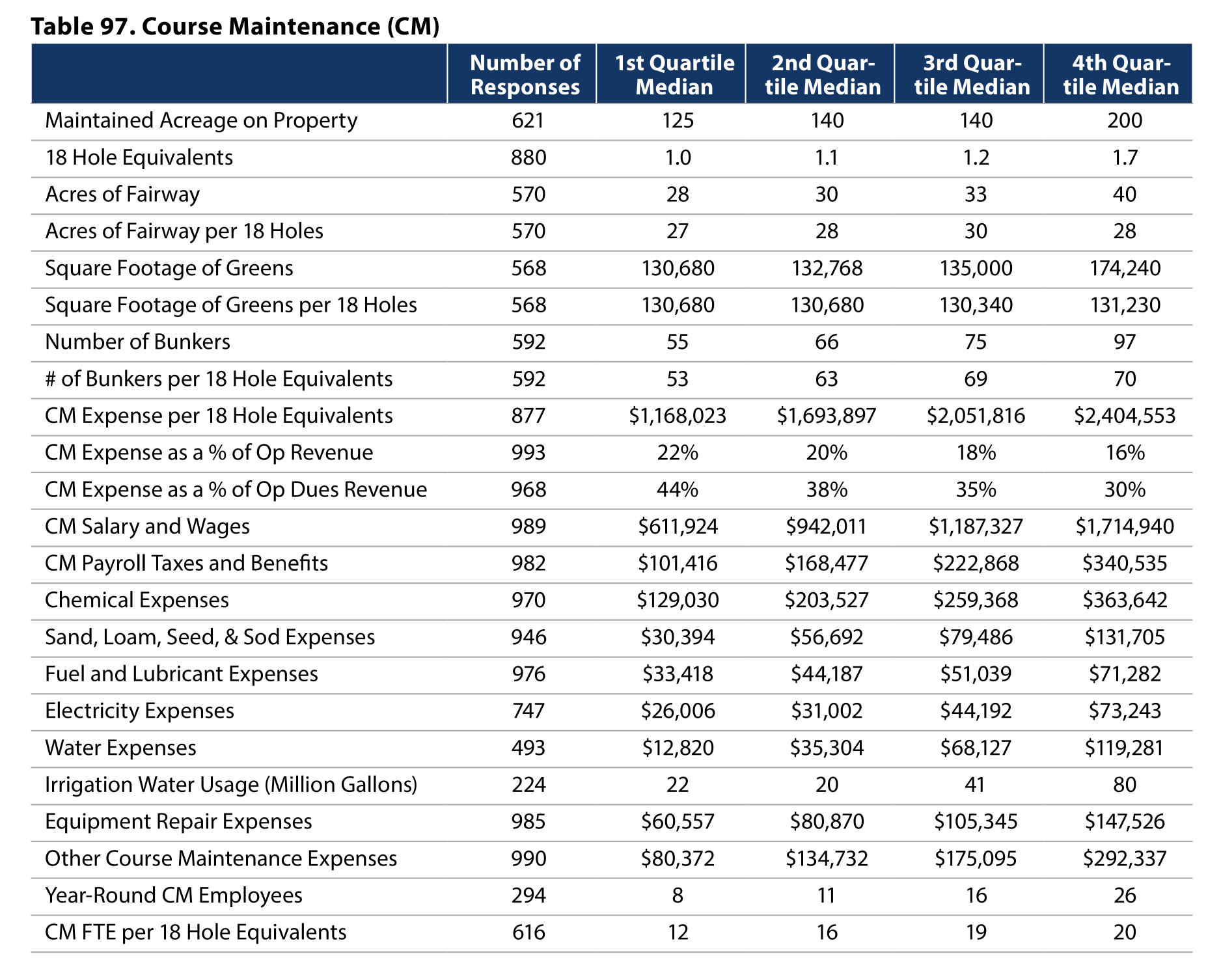
Table 97 characterizes course maintenance (CM) spending with significant details. It is meant to be used as a reference source.
It is important to note that the key factor regarding how much a club spends maintaining a course is the amount the club can afford to spend.

Table 98 shows the distribution of Labor vs. Non-Labor. The industry median is 65 percent Labor, 35 percent Non-Labor. There were 812 responses in total.
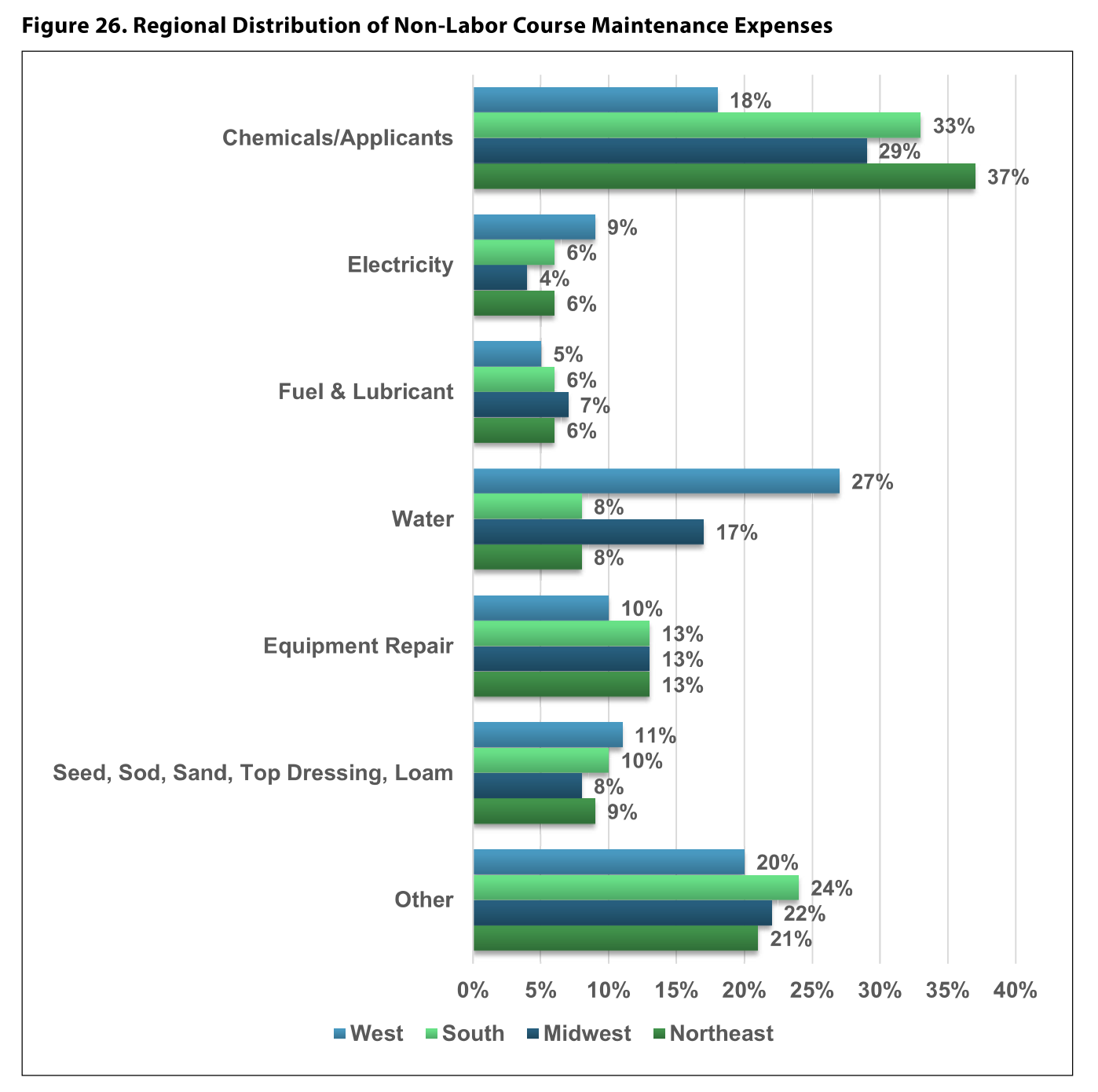
Non-Labor Expense Distribution Breakdown
Figure 26 shows the distribution of non-labor course maintenance expenses by geographic region. There are four regions shown: West, South, Midwest, and Northeast. The most significant takeaway is that water is the one expense that varies regionally. While water expenses vary by region, course maintenance expense in relation to the overall fixed expenses of the club does not vary because of water expenses.
Golf Operations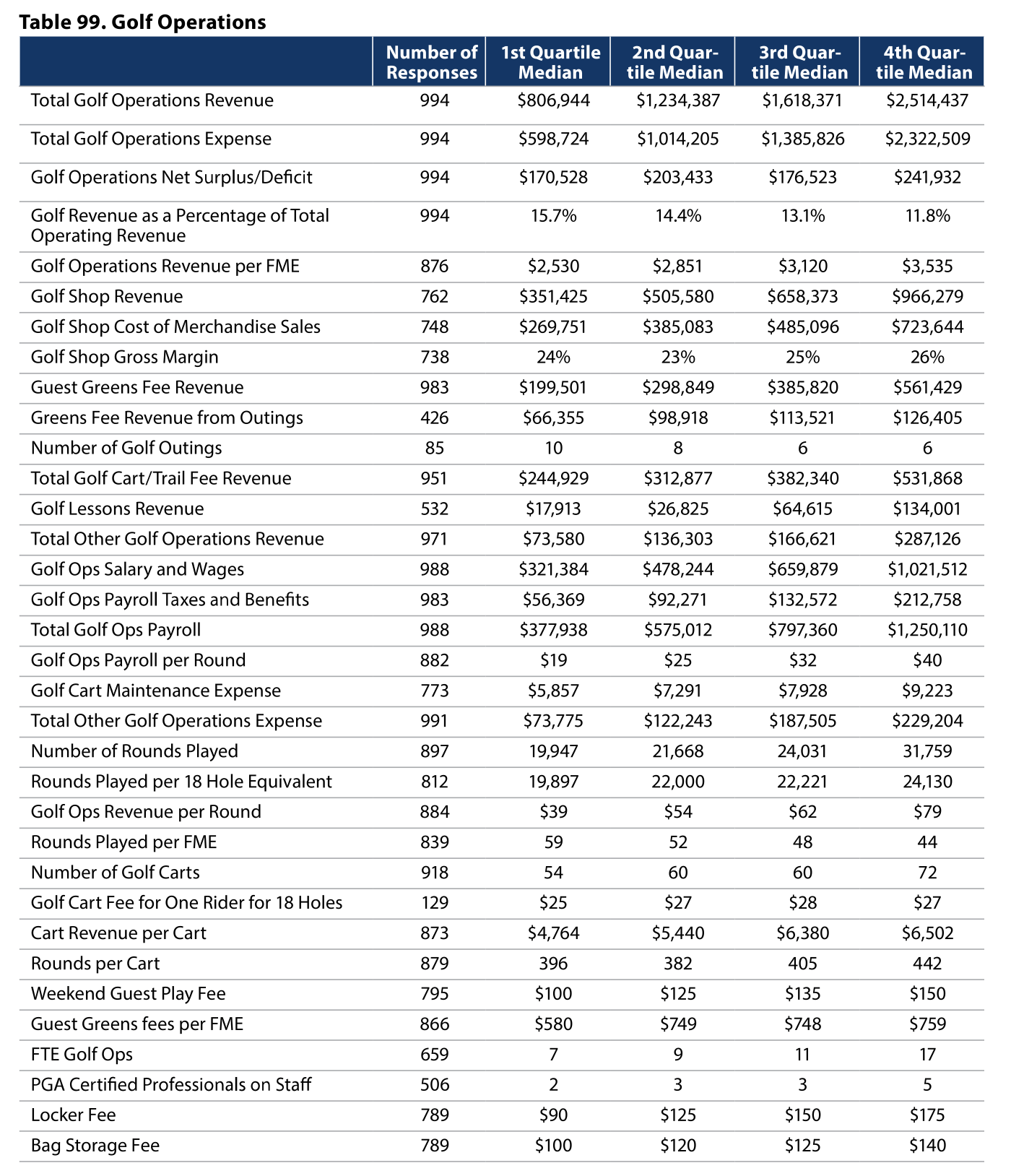
Table 99 considers pro shop revenue and gross margin followed by an analysis of the overall golf operations function, including the pro shop. Overall, the main sources of golf operations revenue are the pro shop, golf car revenue, and greens fee revenue including both guest greens fees and outings greens fees.
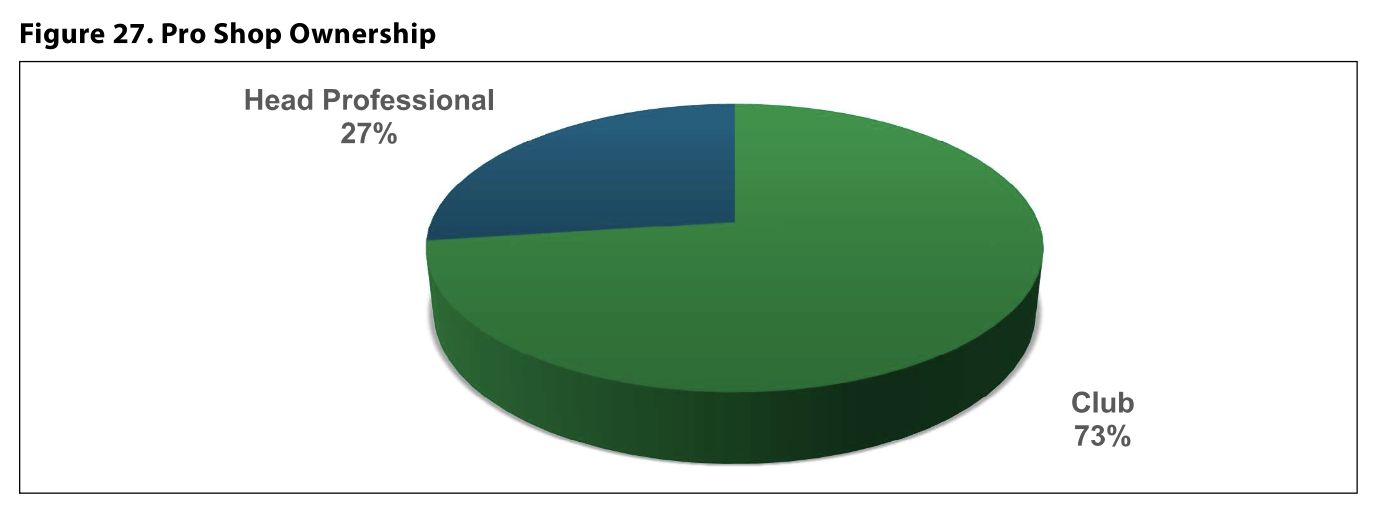
Golf Shop Revenue and Gross Margin
Breakdown of pro shop ownership is shown in Figure 27. Across the industry, just under 75 percent of clubs have golf shops owned by the Club, with the rest owned by the Head Professional. This is roughly the same breakdown as seen in previous years.
Sundry Golf Operations Items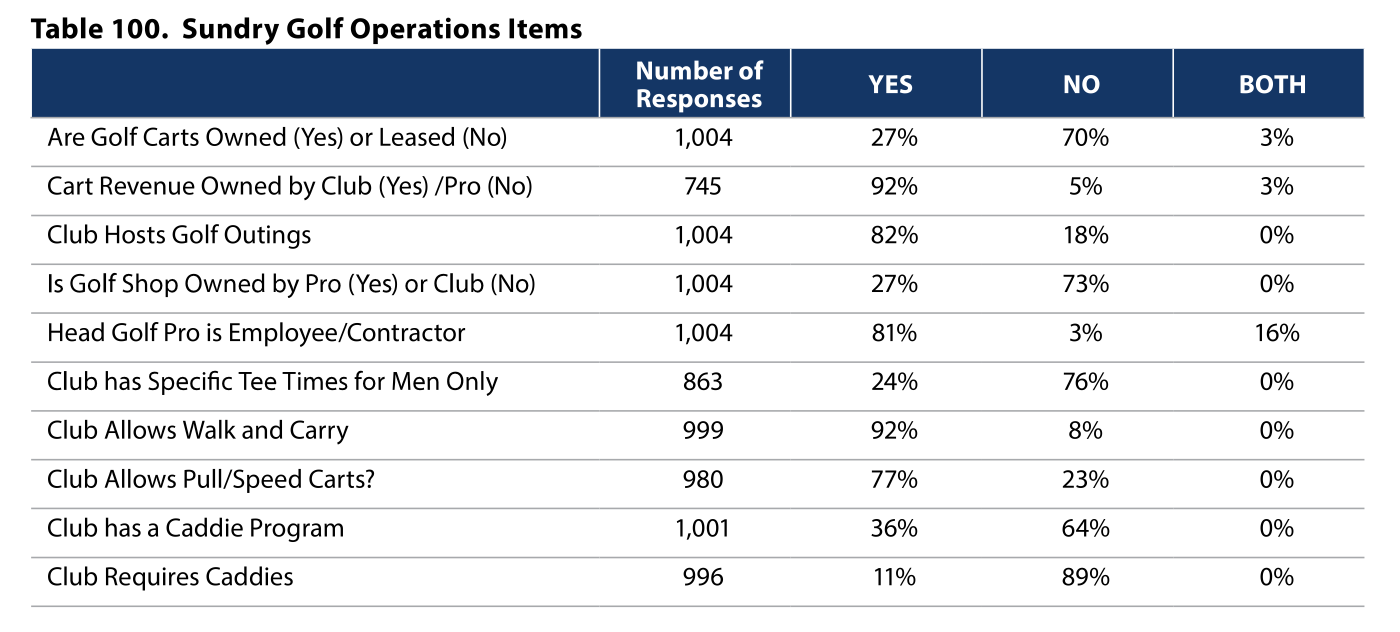
Table 100 reports the responses to various other miscellaneous metrics in Golf Operations, including golf carts and caddie programs. These responses represent any answer from any year that we had respondents to this question.

Best Practices
Market Differentiation Is the Key
What makes your club different from other worthy competitors and comparable clubs? The answer to this question should be topmost for operational leaders in private clubs since market differentiation is a key to your club’s future.
Michael Porter, the much-admired strategic thinker, author of numerous books built on strategy, and Harvard professor is an American businessman credited with recognizing that market differentiation is a desired primary outcome of strategy and strategic planning. So, what makes your club distinctive among many others?
The answer most often heard from members during member focus groups is friendliness. In fact, in a recent GGA Partners market analysis of South Florida clubs, 17 of 23 clubs studied identified themselves with some version of “we’re the friendliest club!” Beyond the lack of originality, friendliness matters to most members who joined a club to fulfill aspirational intentions and to establish a platform for socialization.
As the leader of an operational team in a private club, you will do well to speak with staff and members to understand what truly distinguishes your club from others. Usually members’ attitudes focus on activities, social opportunities, facilities, and seasonal convenience. Staff attitudes normally identify programs (that they serve), amenities, and location.
As the leader of different constituent groups, you are wise to recognize that most clubs achieve market differentiation in different ways with different generations of members. Most clubs are regenerating—growing younger as Baby Boomers age out of their clubs and are being replaced by rising generations.
A quick snapshot of generational perspectives for what factors make your club “different” shows the following characteristics:
- Baby Boomers—those born between 1946 and 1964—are largely concerned with issues of affordability and access to amenities and services. Your youngest Boomers are nearing retirement age while the oldest Boomers are becoming octogenarians. This audience is concerned with affordability and resistant to change…they like the club they joined decades ago. Some of this generation matured during the Watergate years and sustain their distrust of authority. Boomers—who do not wish to be categorized—see their clubs as the center of their lives.
- Gen X members were born between 1965 and 1980. The eldest Gen Xers have recently entered their 60s. They want a robust and social lifestyle that is a mix of fun, friends, and family. One can add some fitness to their recipe, as well. Gen X is carefully watching rising costs despite inhabiting their wealth-building years. Gen X members consider their club to be capable of big ideas and imaginative facilities and programming. Anything less is a disappointment to them.
- Millennials—sometimes described as Gen Y—were born between 1981 and 1996 are the first bona fide natives of the digital age. They expect that their clubs are highly efficient and capable of spot-on communications that are fresh and ready for them. Delays, inaccuracies, and misstatements cause them to distrust their clubs and the leaders thereof.
Thus, what factors make your club different change by the age, experience, and expectations of your members. This circumstance, which club managers are expected to understand and interpret, requires intentionality and clarity in describing what differentiates your club from other worthy clubs.
The key steps for leaders of thoughtful management teams are:
- Recognize the urgency of market differentiation.
- Understand which factors in place or accessible for your club create competitive advantage.
- Communicate with each generation on its own terms and technologies.
Market differentiation is at the core of successful and effective strategic planning.
Insights by Henry DeLozier, Partner, GGA Partners
Featured Podcast
Payroll Protection Program Loans Under the Microscope: What Club Leaders Need to Know
The Let’s Talk Club Management podcast recently interviewed Matthew S. Adams, co-chair of the White Collar Criminal Defense and Government Investigations Practice at Fox Rothschild. He has closely followed Payroll Protection Program (PPP) fraud enforcement and advises clubs and businesses facing government scrutiny related to pandemic funding. Learn why PPP enforcement remains relevant years after the program ended, what the recent cases could mean for the club industry, and what you should be thinking about now.

CMAA News & Announcements
The 2027 CMAA World Conference & Club Business Expo: A Growth Opportunity for Your Club Management Professionals
Club management professionals from around the world will gather February 7-11, 2027, in Chicago, IL, at the CMAA World Conference & Club Business Expo. The industry’s largest annual gathering offers five days of energizing education, a two-day Club Business Expo, networking, and experiences—cultivated specifically for club management professionals. It will be a historic gathering as CMAA marks its Centennial and honors the curiosity, determination, innovation, resilience, and spirit of service that have defined the club management profession and will continue to carry it forward. Will your club’s management team be attending?
Recruit next generation club talent.
Attendees can participate in specially designed networking sessions for professionals and student attendees. Clubs can highlight their internship and entry-level opportunities and meet directly with hospitality students from 40 colleges and universities around the country. CMAA’s on-site career resources offer clubs the opportunity to post club openings at no cost and engage directly with attendees seeking new opportunities.
Gain new insights and ideas.
Education has been the cornerstone of CMAA’s Conferences since its beginning. The 2027 agenda offers information curated specifically for today’s challenges with individual pathways for every career stage. With more than 63 educational offerings across all areas of club operations, attendees can learn directly from industry experts and notable keynote speakers like Organizational Psychologist, The Wharton School of Business; Bestselling Author; Host: Re:Thinking, a TED Original Podcast, Adam Grant.
Discover new solutions for your club’s challenges.
Attendees can create their own think tanks with Open Space and tap into the wisdom of other club management professionals. Additionally, the Idea Fair spotlights hundreds of club-tested solutions for event programming, staff recruitment and retention, communications, and more.
Find innovation and inspiration at the Club Business Expo.
For 50 years, the Club Business Expo has brought together leaders, innovators, and partners who shape the club industry. This year will be no different, with more than 270 industry-leading companies ready to showcase their premier products and services. Find your club’s next big idea and fresh solutions in the New Product Showcase!
Early registration discounts apply through December 10.
Register by November 17 for Virtual Board Education Opportunity
Great club governance doesn’t happen by accident—it’s driven by intentional action. It requires deliberate focus and consistent investment from the club executive and the Board of Directors. Your club’s efforts should begin with preparation and education.
CMAA’s Governance & Leadership Symposiums offer accessible, collaborative, virtual education for your Board of Directors and club executive. Explore important strategic governance topics built on the principles of:
- Informed Leadership
- Strategic Stewardship
- Empowered Management and Staff
- Compelling Member Experience
CMAA’s next Governance & Leadership Symposium offers accessible, collaborative, virtual education for club Board of Directors and club executive. Attend from anywhere with an Internet connection.
Past attendees highly rate these sessions. John Wilkening, CCM, explains “The Governance & Leadership Symposium should be required education for all incoming Board members as well as any club management profession.”
Leave this symposium more informed and equipped with key takeaways for improving club governance.
The Symposium is presented in partnership with KOPPLIN KUEBLER & WALLACE,
a CMAA Executive Partner.
